Window Cleaning
Reach and Wash, Abseil, or Cradle: How to Choose the Right Window Cleaning Method in London
When you ask three different window cleaning companies in London for a quote, you might get three different methods proposed for the same building. That's not necessarily because anyone is wrong — it's because the right method genuinely depends on the building, the access, and what the property is being used for. Choosing the wrong method costs money, takes longer, and can produce disappointing results.
Here's how to think about it.
Method 1: Reach and wash
What it is: Cleaning windows from the ground using a telescopic carbon-fibre pole fitted with a soft brush. The pole is fed with purified water (no detergents, no streaks).
Reaches up to: Around 60ft (roughly five storeys with standard floor heights).
Best for:
Schools, GP surgeries, and community buildings
Low-rise office blocks and business parks
Period homes and townhouses
Modern apartment blocks up to 5 storeys
Conservatories and skylights
Pros: Fast, no working at height, low cost, no disruption inside the building, environmentally friendly (purified water only), excellent for frames and cladding as well as glass.
Cons: Limited reach, not suitable for windows behind features that block pole access, and weather-dependent (won't work in heavy wind).
Method 2: Rope access (abseil)
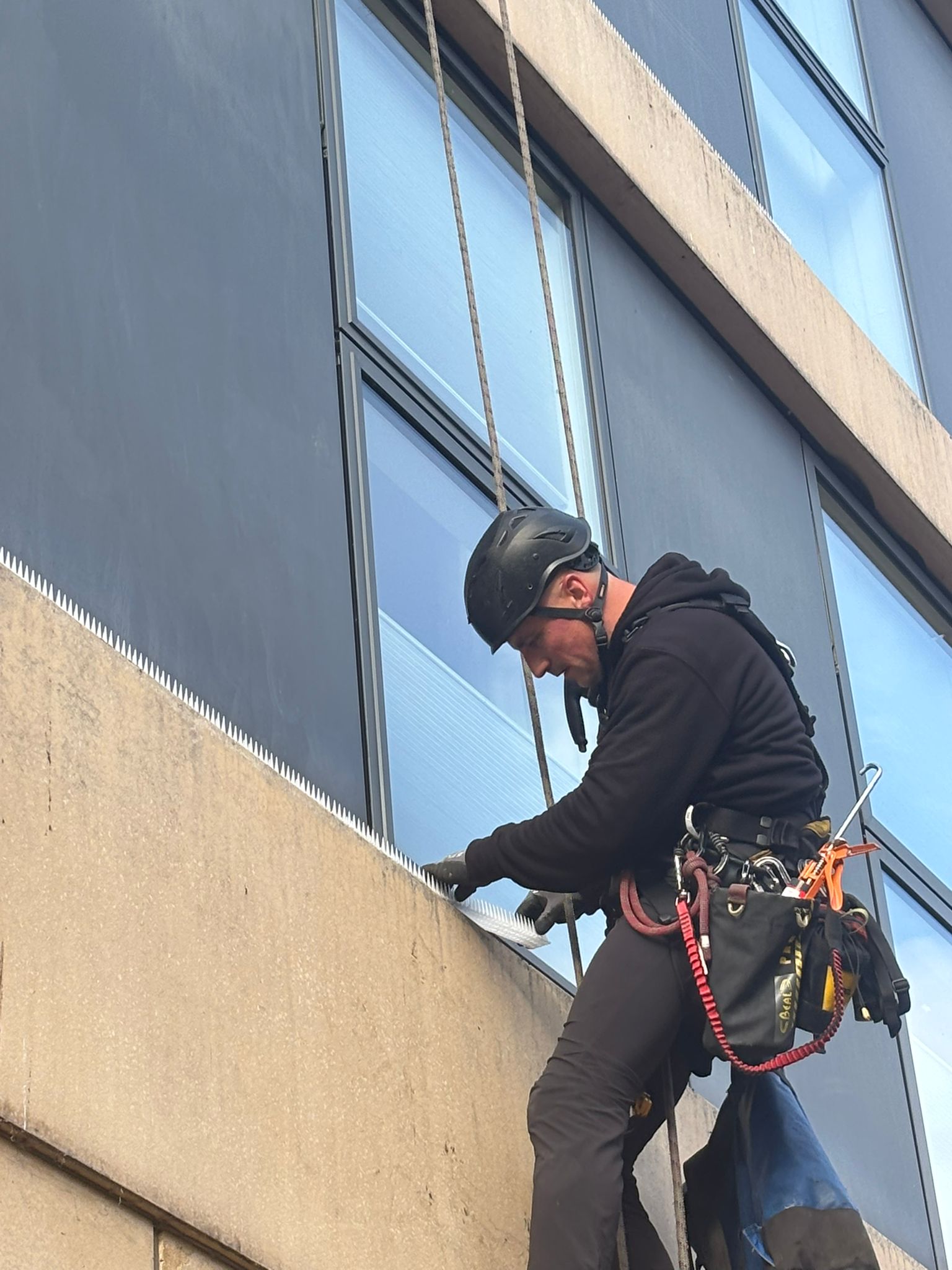
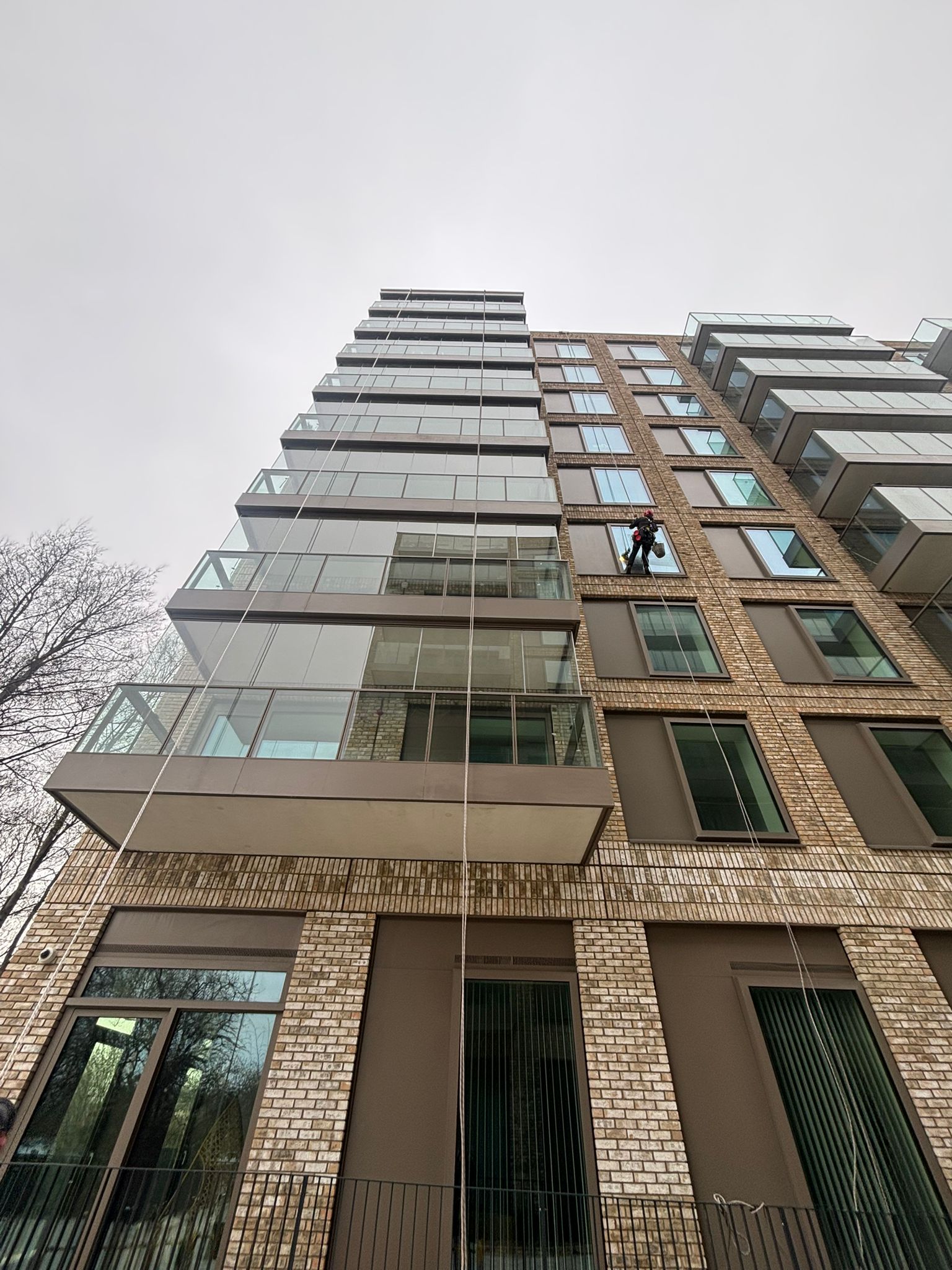
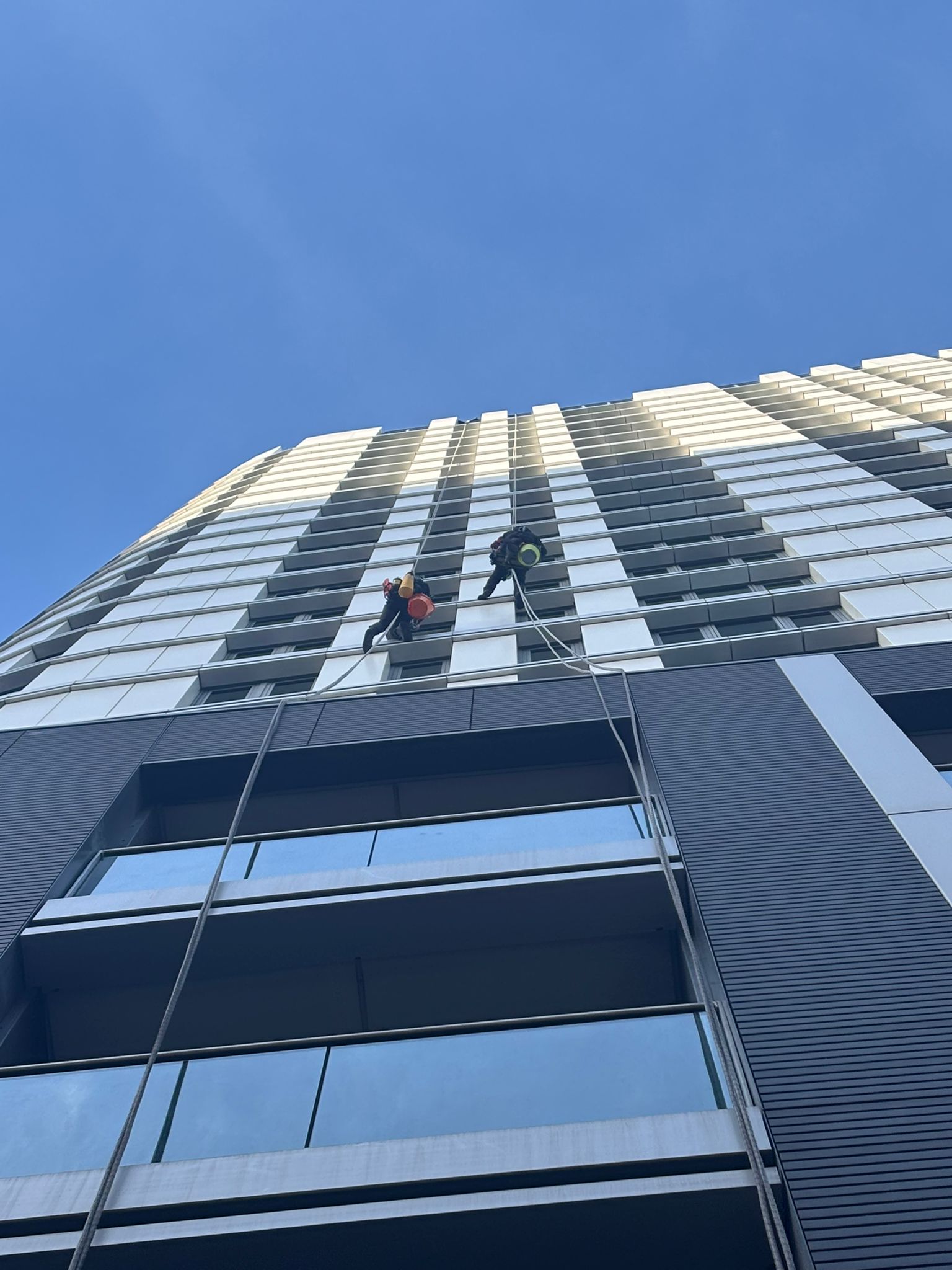
What it is: IRATA-certified technicians abseil from the roof of the building, cleaning each window as they descend.
Reaches: Any height, any angle, any building with suitable anchor points.
Best for:
High-rise commercial buildings
Modern apartment towers
Buildings with awkward features (balconies, recesses, atriums)
Listed and historic buildings where scaffolding would damage façades
Buildings without permanent BMU cradles
Pros: Reaches anywhere, faster than scaffolding, far cheaper than scaffolding or MEWPs, minimal ground disruption, accesses recessed and angled windows that other methods can't.
Cons: Requires suitable anchor points (these can be installed if not present — see eyebolt testing). Weather-dependent. Only as safe as the certification level of the technicians.
This is where the choice of company matters most. Always confirm IRATA approval, Level 3 supervisor on-site, and SafeContractor accreditation before agreeing to any rope access work in London.
Method 3: BMU cradle
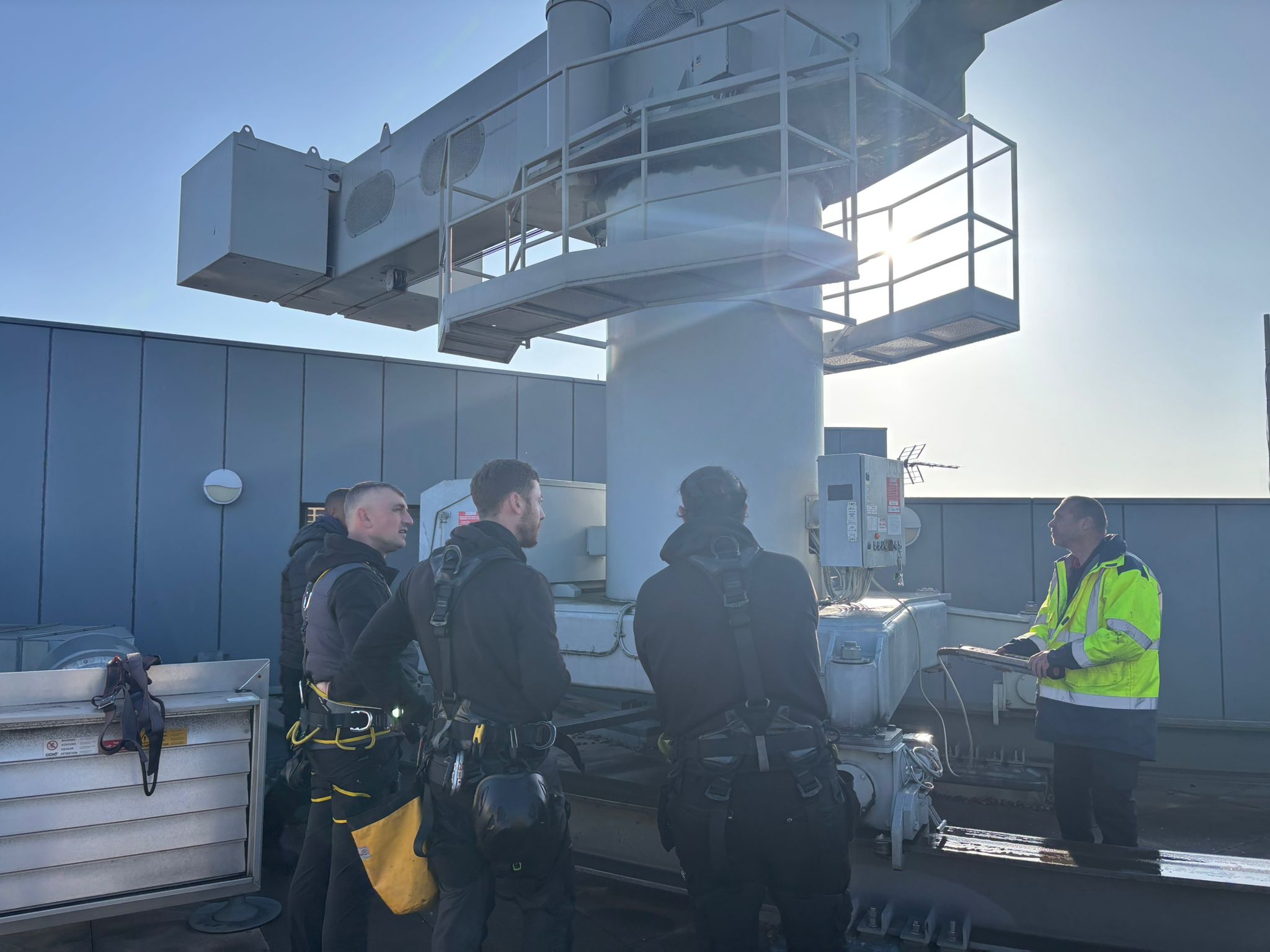
What it is: Cleaning from a Building Maintenance Unit — the permanent cradle fitted to the roof of many large London office buildings, designed specifically for that building.
Best for:
Office towers and large commercial buildings already fitted with a BMU
Buildings where the BMU is the only sanctioned access method (some specifications require it)
Routine cleaning where the cradle is already serviced and tested
Pros: Designed for the building, no rigging required, can carry tools and equipment easily, suitable for heavy or repetitive work.
Cons: Operatives must be specifically trained on each individual cradle (not transferable). Cradle servicing and LOLER inspections are a separate cost. Slower than rope access for pure cleaning work. Some cradles can't reach all parts of the building.
Method 4 (bonus): Traditional ground-level cleaning
For shopfronts, ground-floor offices, restaurants, and accessible residential windows, a squeegee, scrim, and detergent in trained hands still produces the best finish. This is often used in combination with another method on a single job.
How to choose for your building
A quick decision framework:
Is the whole building under 60ft? → Reach and wash is almost certainly the answer.
Is it 60ft+ and there's a BMU fitted? → Cradle, with rope access as a backup for areas the cradle can't reach.
Is it 60ft+ with no BMU? → Rope access.
Are there awkward features (recesses, balconies, atriums) at any height? → Rope access, even if other methods could reach the rest.
Is it a builders' clean on a new development? → Often a combination — rope access for the façade, traditional for ground level.
A good window cleaning company in London will assess your building and tell you which method (or combination) is most cost-effective. They should be able to deliver any of them, not push you towards the only one they offer.
Don't let the company choose for the wrong reasons
Some London window cleaning companies will quote rope access for everything because that's all they do. Others will quote scaffolding because they have a relationship with a scaffolding firm. The right method should be chosen based on your building, not the supplier's preference.
At GB Rope Access Techs we offer all four methods — reach and wash, rope access (abseil), BMU cradle (with operative training for your specific building), and traditional ground-level cleaning. We'll recommend the right approach for your property honestly, even if it means a smaller invoice for us.
Both directors are IRATA Level 3 certified, the company is IRATA approved and SafeContractor accredited, and we're a Firstport-approved supplier. Contact us for a free site assessment and we'll talk you through the right method for your building.
Window Cleaning
Window Cleaning Services in London: The Complete 2026 Guide
Everything property managers and homeowners need to know about professional window cleaning in London — methods, frequency, accreditations, costs, and how to choose the right team for your building.
Cleaning Techniques
Rope Access vs Traditional Window Cleaning: Which Is Best for London Buildings?
Scaffolding, cherry pickers, ladders, or rope access? We break down the real cost, safety, and time differences between traditional and rope access window cleaning in London.
Window Cleaning
How Often Should Commercial Windows Be Cleaned in London?
A clear, building-by-building guide to commercial window cleaning frequency in London — backed by 35+ years of industry experience.